What Florida Homeowners Get Wrong About Mold Smell
If you’ve ever walked into your home and caught a musty, earthy smell, your first thought might be: Did I forget to take out the trash?
In many Florida homes, that smell is something else entirely.
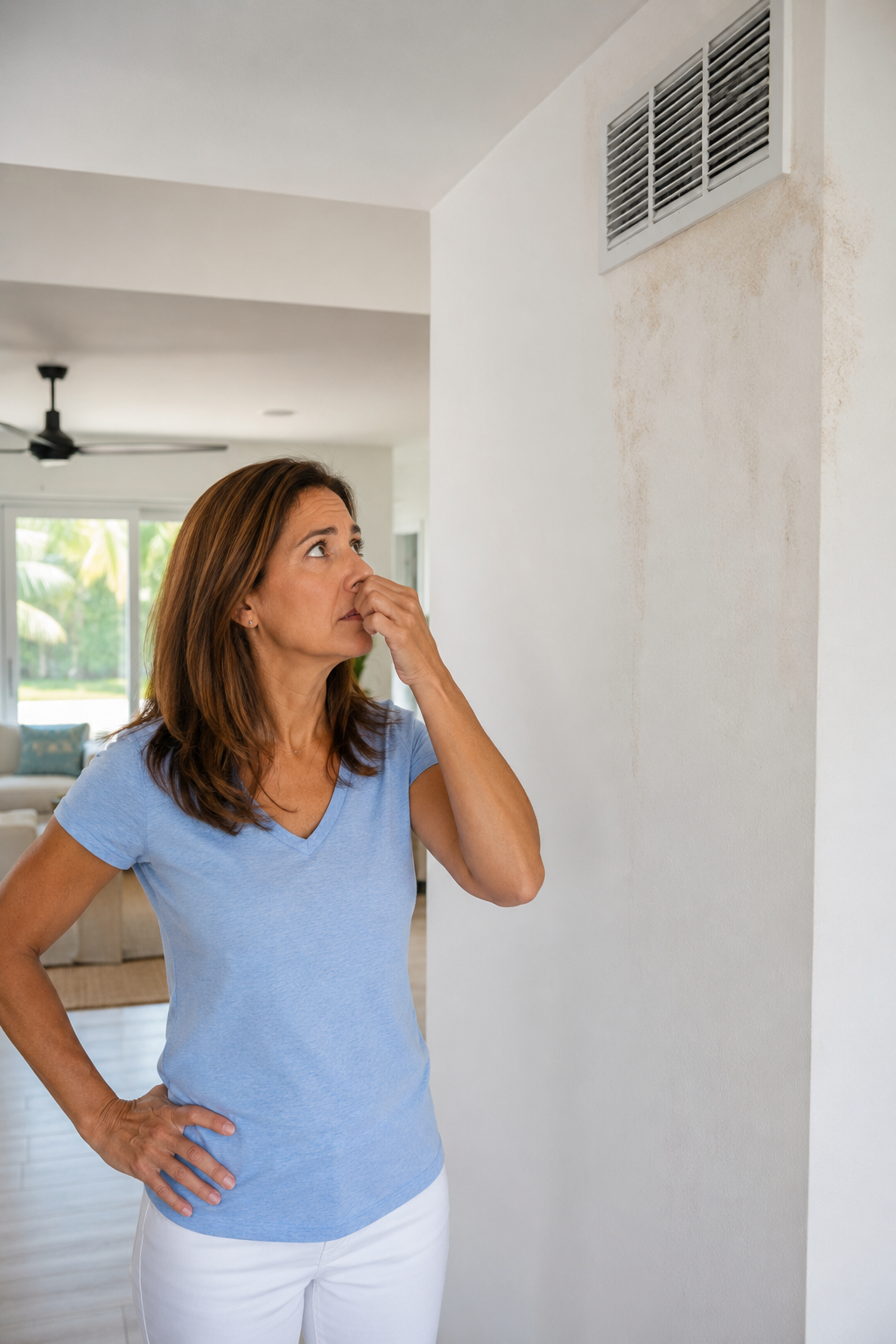
Because of Florida’s heat, humidity, and frequent moisture, mold can grow quietly behind walls, under floors, and inside HVAC systems long before you ever see visible spots. The smell is often the first warning sign, but many homeowners misunderstand what it actually means.
Let’s clear up some of the biggest myths about mold odors and what they could be telling you.
Myth #1: If I Can’t See Mold, the Smell Isn’t Mold
One of the most common misconceptions is that mold must be visible to exist.
In reality, mold often grows in hidden places, including:
- Behind drywall
- Inside air ducts
- Under flooring
- Inside insulation
- Behind cabinets or appliances
By the time mold becomes visible on walls or ceilings, the problem may already be widespread.
That musty smell is often caused by microbial gases released during mold growth. Even small hidden colonies can produce noticeable odors.
Myth #2: Air Fresheners or Cleaning Will Fix It
Many homeowners try to solve the problem by masking the odor.
They may use:
- Air fresheners
- Scented candles
- Deodorizers
- Heavy cleaning products
While these might temporarily cover the smell, they don’t address the source.
If mold is growing behind walls or in an HVAC system, surface cleaning won’t stop it. In fact, the odor may return quickly because the underlying moisture and growth remain.
Myth #3: The Smell Is Just “Florida Humidity”
Florida homes often develop a slightly damp smell during the rainy season, but a persistent musty odor is not normal.
That smell often indicates:
- Hidden moisture problems
- Mold growth in building materials
- HVAC condensation issues
- Poor ventilation or airflow
Humidity alone doesn’t produce a strong musty odor. When that smell appears regularly, it’s usually a sign that microbial growth is present somewhere in the home.
Myth #4: If the AC Is Running, Mold Can’t Grow
Many homeowners assume their air conditioning system prevents mold growth.
Unfortunately, HVAC systems can actually contribute to mold problems when moisture builds up inside the system.
Common HVAC-related issues include:
- Condensation inside ducts
- Clogged drain lines
- Mold growth on coils
- Poorly insulated ductwork
When this happens, the system can circulate mold odors throughout the house, making the smell seem stronger in multiple rooms.
This happens because mold becomes more active when moisture levels increase. So if the smell seems to appear and disappear, that doesn’t mean the problem is gone.
Myth #5: If the Smell Comes and Goes, It’s Not Mold
Another common misunderstanding is that mold smells should be constant.
In reality, mold odors often change depending on environmental conditions.
For example, the smell may be stronger:
- After rain
- When humidity rises
- When the AC turns on
- In the morning or evening
This happens because mold becomes more active when moisture levels increase. So if the smell seems to appear and disappear, that doesn’t mean the problem is gone.
If your Florida home has a persistent musty smell, a professional inspection can help identify the source and give you clear answers.
Why Mold Odors Matter
A persistent musty smell isn’t just unpleasant. It can signal hidden moisture problems that may damage your home over time.
Left unaddressed, mold growth can affect:
- Indoor air quality
- Building materials
- Property value
Identifying the source early often makes the issue much easier and less expensive to address.
How Professionals Track Down Mold Odors
Finding the source of a mold smell often requires more than a quick visual inspection.
A professional odor investigation may include:
- Moisture detection
- Thermal imaging
- Air samplin
- Surface sampling
- HVAC inspection
- Humidity testing
These tools help pinpoint where mold may be growing behind surfaces or inside systems that aren’t visible during a basic walkthrough.
Don’t Ignore a Persistent Musty Smell
About the Author: Ali Jaffri is a licensed mold assessor, trade veteran, and the owner of Florida State Mold Inspection. He runs a customer-centric operation as described by customers in his Google reviews. Backed by years of hands-on remediation experience and a background in roofing logistics, Ali specializes in tracking complex indoor air quality problems back to their origin. Known for his uncompromising client advocacy, he provides independent, scientifically rigorous assessments that protect property owners from industry pressure and gaslighting. For more information, visit Florida State Mold Inspection or connect with Ali on his LinkedIn page.